
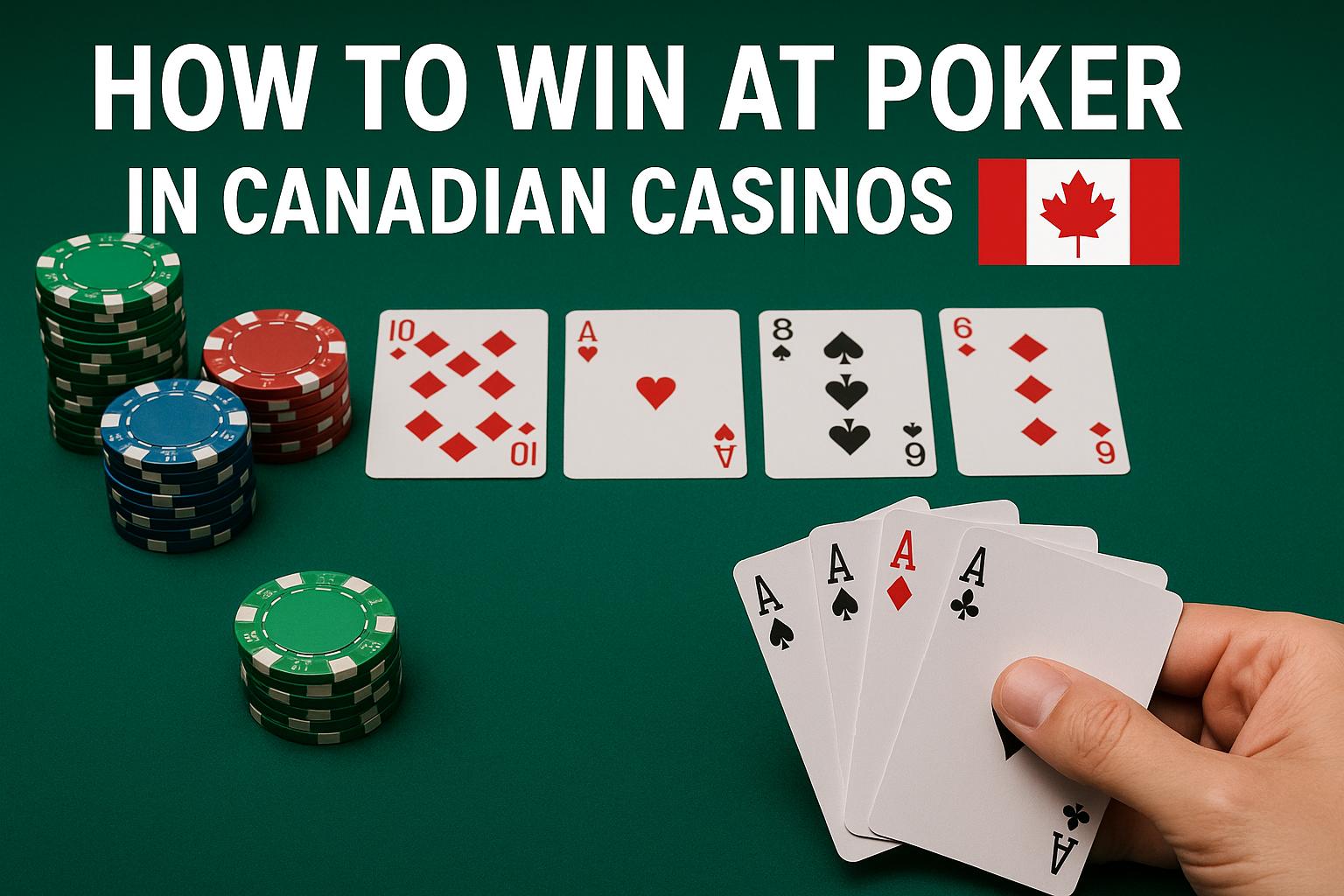
Understanding the Rules of Poker
Before attempting to win at poker in Canadian casinos, it’s crucial to fully understand the rules of the game. Various poker variations are available, including Texas Hold’em, Omaha, and Seven-Card Stud. Each has its distinct rules and strategies. Familiarizing yourself with these differences is essential. Many online resources and local poker clubs offer training materials that can serve as a helpful starting point. Each version of poker not only varies in its rule set but also the tactics that players employ.
For instance, Texas Hold’em is the most popular version and is renowned for its no-limit format which requires players to bet their chips wisely. In contrast, Omaha gives players additional information with more cards in hand, which can significantly change the game dynamics. On the other hand, Seven-Card Stud does not involve community cards, which makes the ability to read opponents’ upcards crucial. Becoming adept at the nuances of these different forms can significantly elevate a player’s competence, offering an edge in varying game situations.
Choosing the Right Casino
Not every casino in Canada is the same. Some offer a better poker environment based on the level of competition and types of games available. Researching casinos to determine which will fit your skill level and preferred poker variation is a critical step. Some well-known options are Casino de Montréal and River Rock Casino Resort. These establishments provide a mix of both professional and amateur players, offering varied challenges.
The atmosphere in each casino can differ, and so does the culture around the poker tables. Some places might host more high-stakes games while others offer an environment more suited to beginners. Understanding the customer base of a casino, as well as any events or tournaments they may host, can also provide insight into where one might prefer to play and hone their skills.
Observe Before You Play
If you’re new to a particular casino or poker setting, it might be wise to observe several games before jumping in. Watching other players can provide valuable insights into common strategies used, betting approaches, and player behaviors. It’s an effective way to learn the table dynamics without risking any of your money. Bringing attention to patterns, bets, and outcomes can help slot a piece of the broader picture into your strategic approach.
Additionally, by focusing on the game flow, one can become attuned to how players respond under pressure, the different styles evident at the table, and frequently used successful tactics. While observing, pay attention to the different stages of betting rounds and how they affect decision-making processes. The subtle adjustments made by experienced players during these stages can be both educational and crucial for future application in your gameplay.
Bankroll Management
Effective bankroll management is crucial for success in poker. It ensures you can weather the natural variance that comes with the game. Set a budget before you play and stick to it. It’s advisable to only play with money you can afford to lose. This removes emotional decision-making from the equation, allowing for more strategic gameplay. By implementing a solid bankroll strategy, players adopt a more disciplined approach, ensuring that losing streaks or swings in fortune do not land them in financial worry.
Consider breaking down your bankroll further into individual session investments to limit excessive losses. Ensuring your bankroll is robust enough to sustain the stakes you are playing is also critical. One can periodically reassess the size of their bankroll compared to their chosen stakes to understand if adjustments are necessary. The goal is to provide financial longevity and a stable platform from which to build future success.
Master the Art of Bluffing
Bluffing is an integral part of poker but requires practice to perfect. Successful bluffing involves convincing your opponents that you have a stronger hand than you actually do. It’s a skill that involves understanding players’ psychology and reading the situation. Being cautious, however, is key; excessive bluffing can become predictable and backfire.
A well-placed bluff is a powerful weapon in a player’s arsenal, especially when combined with a reputable playing history of solid hands. The mental aspect of poker easily features as prominently as the physical cards in your hand — understanding when the table views you as a calculated risk-taker or conservative player allows you to manipulate your table image effectively for bluffing opportunities.
Pay Attention to Position
A player’s position at the poker table can significantly impact their strategy and likelihood of winning a hand. Being in a later position is generally advantageous since it allows you to see how other players act before you. Understanding the nuances of position can greatly enhance strategic gameplay, as late positions provide opportunities for bluffing and stealing blinds with weaker hands, whereas early positions call for more conservative play styles with only strong hands.
Each position carries its inherent advantages and constraints. Learning to maximize your positioning and adapt accordingly forms a critical foundational concept to achieve long-term success. Being cognizant of where you are sitting during each hand empowers you to minimize risks and bolster your returns.
Regularly Review Your Play
After a session, whether it was profitable or not, take the time to review your decisions and results. Identifying what went well and areas that require improvement is crucial. This analysis can refine your strategy and improve your performance in future games. Many seasoned players maintain a journal to track their progress over time. Documenting hands that stood out, noting mistakes, and reflecting on opponent behavior enriches the learning experience, aiding continuous improvement.
Implementing these strategies effectively requires practice and patience. Success in poker at Canadian casinos comes from a combination of skill, strategy, and sometimes a bit of luck. By focusing on improving your game continuously, you’ll be better positioned for victory at the poker tables. The blend of theoretical understanding, practical application, diligent study, and psychological acumen enables a player to excel, navigating through the various challenges poker presents.
This article was last updated on: March 15, 2026